Thursday, 5 May 2016

Blog 59

I have read three different blogs this week from fellow creatives who have recently been on business and research trips, one in Chicago, another from New York, and the other in Poland. I myself have been on a research trip this last month to coincide with an exhibition I have been in with the artists group Plastic Propaganda, this time home to Kent, with the show taking place in London.

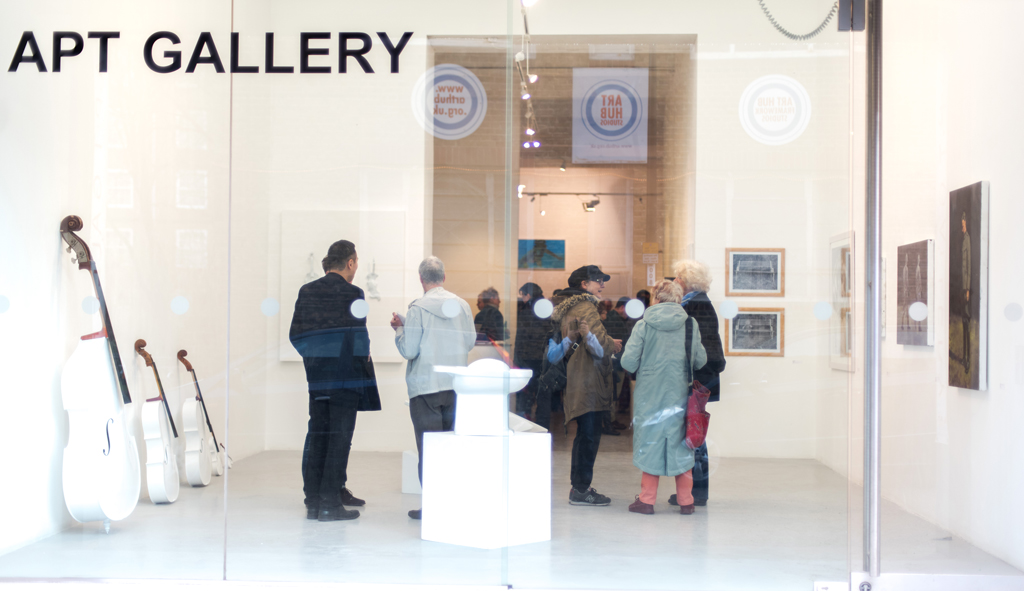
Our show was called 'Both Ends of Madness' exploring the human need to create as a kind of necessity, to the therapeutic benefits of creative making whether you are an artist or not. Our group are very dispersed internationally and it was lovely to catch up and meet new friends.

At the beginning of my trip I had a very much needed mentoring session with the outcome really suggestion that perhaps I should step back slightly and purposefully write a manifesto. Whilst I continue to make new work seemingly and continually in it's infancy, what really is my subject? And just as important, to help as a guideline, what is my end goal? We went from talking about Biosemiotics to silence, existentialism, the ephemeral, acts of intervention, process as meaning, the meaning behind making and ways to present 'slow' work. I have a lot to think about.

Our host where we are staying in Portugal has recommended the methodology of 'mind mapping' to clarify one's ideas, thoughts and feelings. I have brought the e Kindle version of 'The Ultimate Book of Mind Maps®' by Tony Buzan so we'll see how I get on unravelling my buzzing brain. Maybe I'll create some artworks out of this activity?

On this note I would like to share with you the work of Lucy Gresley, fellow member of the Plastic Propaganda group. If you go to her webpage under the section http://www.lucygresley.com/#!thinking/crpi , there is the wonderful 'Practice As Research Poster' 2015 which she has created (third image down). The title of this section of artworks is called 'Thinking'.

I tried to link up with a number of creative people whilst in the area. I had the pleasure of spending a morning with Hannah ten Doornkaat. An experienced artist and fellow twitterer, it was our first meeting. Hannah generously showed me round her studio, sharing her finished artworks, new ideas in progress, telling me about her exhibition activities, experiences of selling work, thoughts on what I could do, and generally the ups and downs of being an artist. This visit and our conversation was so nice for me as it is something I don't get to do often enough, thank you Hannah. Here is Hannah's website: http://www.tendoornkaat.co.uk/home

I also had a morning with designer and artist Mandy Munroe. We have known each other a few years and took great delight in talking all things quilts and knitting. These skills are perhaps on the peripheries of my practice at the moment but I wanted to pick Mandy's brains and her expertise to increase my knowledge and get my creative thoughts moving in a broader way. These are not technical terms for quilt making and I paraphrase by saying I have learnt "it's all about the square", how to use negative space, low loft and high loft wadding and how you can create "hills and valleys", to name a few. These expressions give me titles for ideas, even if not with quilting. Thank you for your time Mandy. Here is Mandy's blog: https://mandymunroe.wordpress.com

Continuing with sewing I did spend quite a bit of time in the top end designer shops whilst in London. I am no fashion guru at all, and this was partly for my own dress-making, but I wanted to look at the different fabrics, how they are matched together and construction. I deliberately didn't look at the prices but you can understand and appreciate the craftsmanship that has gone into many of the hand-sewn or hand-finished items, which seems to be the 'in' thing? The quality of many of the fabrics are like nothing I have ever worn and the inside of many garments was just as neat as the outside in terms of tailoring skills, unless the 'unfinished' look was part of the design. Thoughts about shape, form, construction, sculpture, texture, abound.

As for art exhibitions I visited many whilst in London, too many to list here. My highlights were Sergej Jensen 'Moneybags' at The White Cube where I had my "oh yes" moment and Piero Manzoni 'Achromes: Linea Infinita' at Mazzoleni Art Gallery. I was so pleased to see a collection of this artist's work in one place.

I also visited 'Conceptual Art in Britain 1964-1979' at Tate Britain and 'Electronic Superhighway 2016-1966' at the Whitechapel Gallery. I have been described as a conceptual artist in the past and I like conceptual art but perhaps not always the visuals. My visit to the Whitechapel Gallery was in question to what is my relationship with the internet? I joke here and say it is a love/hate relationship! I think actually my favourite work in this show was Allan Kaprow's 'Hello 1969' where he linked up people internationally via a live television broadcast, with everyone keep saying 'Hello??'. It seemed very much like an early form of our modern day Skype.

By the way, it seems to be popular at the moment to curate shows with their timeline going backwards rather than forwards.

Talking of the internet I do just want to add Alex Evans blog link. He is the artist I have just read about who has been to New York recently, and the internet becoming key to his practice:
https://www.a-n.co.uk/blogs/networks-in-new-york

I finish my blog with some images from our exhibition in London. There are 200+ images to choose from and I apologise to those people I have left out. You are all here on my computer at home. Thank you to Jez Giddings for taking our images. If you would like to know more about this artists group that I belong to, here is our website: http://www.plasticpropaganda.co.uk


Setting up.


Ready to go.


A brief interlude whilst mopping the floor.


A portion of my work in detail.

Opening night.


Opening night.


Glimpses of our guests on opening night, through my work.


Opening night.


Deep in conversation, opening night.


Deep in conversation, opening night.


Deep in conversation, opening night.


Setting up - detail of Anjula Crocker's work.


Extended line drawing - some of the work of Lucy Gresley.


And more of Lucy's work - using Mohair wool mmmmm!


Mohair detail.


Public Symposium night.


A still of John Butterworth's film.


Looking out onto the street.


Tuesday, 9 February 2016

Blog 58

This blog post is all about making. It could read 'To Pierce, To Knit, To Sew'...

Some of the works I show below were made when living on the Isle of Mull in Scotland whilst others have been created whilst here in Portugal. They are developmental 'Works in Progress'.


My starting point - Pierced Paper, Ink Dots, Stitch Markings...


Selection of Pierced Papers - ongoing


Selection of Pierced Papers - ongoing


Selection of Embossed Papers - ongoing


Selection of Pierced Papers - ongoing


But what to do with them all?
What about a mass of pierced papers (bigger than this example)? 
Presented on the wall, on the floor, on a table, bench, or plinth... a kind of visual diary really?


What about stacking? Piles of pierced paper? (Obviously lots more than this).
When the paper is pierced it becomes voluminous. 


Examples of threads...

I like to knit. It is the most relaxing activity of all the things I do, at least for the moment. Above are some examples of the threads I am trying out. 


But what to do with all the squares?
What about stacking? Piles of black squares...? 

Obviously there needs to be lots more than this, and obviously neater and more uniform in size. Think architectural stacks. The verb 'To stack'? And by doing lots more, I should improve my knitting skills...

What about a free form knitted 'quilt' / 'blanket', that could be hung on the wall, or draped like the felt works of Richard Serra? 


The thick black wool I've used is quite stiff to work with, and the more threads you knit with at the same time, the tougher and more robust the fabric produced. It could be manipulated, moulded and has sculptural potential...


Perhaps some sort of adhesive, or setting agent would help each piece stay in it's sculptural position? Can anybody recommend something or a method I could use? Of course over time it might sag. I could call it 'To Sag'...


My favourite thread of all at the moment is mohair. I like how hairy it is and it is so light to touch and hold. Sticky, yet fly away. The nature of the thread's hairiness makes it very voluminous. Hard to show in a photograph, but I imagine a room full of mohair thread, unravelled, as it is. Yes, you would need a lot of thread and mathematically could work out how much you would need. It would be a kind of sculpture or three dimensional drawing. It could also be like a big tumbleweed... 


I have been wrapping...


And stretching...


A different thread - 'To Stretch'...

I imagine squares of knitted fabric stretched between pins on a wall. They might look like little maps? Think how many different types of patterns you could form just by tweaking the direction you stretch the square. 


Fishing wire, crocheted.

I'm guessing that people would like to see through the crocheted fishing wire or with all it's shadows showing, something like the photograph above, not with the olive trees of course.


I like the idea of the fishing wire on a white background. Again difficult to show in a photograph, but what about a free form knitted 'quilt' / 'blanket'? It could be hung on the wall, or draped like the felt works of Richard Serra? You would kind of see it and not see it, it's opaqueness.

And what about spread out on the floor - soft, billowing, bubble / foam - like, fluttering, oozing...


Black and white mohair thread knitted together - detail


Black and white mohair thread knitted together - detail

I like the combination of knitting black and white threads together. There is too much white here in this sample above, but I like the idea of random white threads 'just' peaking through the black. It looks like a drawing or painting, and due to the knitting process every square would be different. 


I brought the cream thread above when I found it in a wool shop on a car journey up to the top of Scotland. I've always really liked it and feel there is a connection between the wool and the watercolour paper that I use. I know the colour is the same but I'm not sure why else I'm drawn to it? How am I connecting the two visually, and how can I show that through making? 

Likewise with the next two images below, I feel there is a connection between the knitted fabric and the watercolour paper. I want to sew the two materials together. Why?


This piece above I have had a long time and it is one of my favourites. I like the left hand side with the cream mohair thread sewn through the cellophane, such a juxtaposition of materials. The cellophane is the outside wrapper from a birthday card. I have a stash of cellophane card wrappers. What would this look like sewn en masse? Karla Black, a well known Scottish artist creates large sculptures using cellophane. 


Having completed my first patchwork quilt for our motorhome this last year, I decided to try out this method using plain paper and pierced paper. I don't think it works, at least not yet. It is the wrong paper, too thick, chunky, clumsy looking. Too many squares. What I do like is how the pierced squares of paper are raised against the un-pierced, flat squares of paper, again the pierced paper is becoming voluminous and puffing out.


Simple is definitely best. Imagine this work above, on a larger scale, the un-pierced flat paper fixed to the wall, the pierced section hanging freely, kind of just hanging, dangling.


Mohair thread sewn into Pierced Paper.
I like the juxtaposition of textures.


I return to fabric. The two images above are of the pin cushion that I have made to use when I am sewing, when making art. I like it as a soft object on its own. I particularly like the lines of the seams, and where they join perfectly! Why?

April this year I will be presenting a selection of my black pierced paper artworks in London with the artists group Plastic Propaganda . It will be at the A.P.T. Gallery in South East London from 7 - 24th April. Our show is called 'Both Ends of Madness'. It is about the idea of the 'mad genius' and an exploration looking at artists who might struggle to make work in search of the impossible, to artists who use art making as a form of therapy. What leads to fulfilment in making and what are the therapeutic benefits of doing this?

My artist's statement explains why I like to make:

Richard Serra’s Verb List (1967-68), sets down the infinitives of 84 verbs and 24 possible forces and contexts as a linguistic bank of possible artistic actions in response to particular material qualities. Taking this as my starting point, my verb list might include: 

to de-clutter
to purge
to empty…

I like to pierce paper, gradually weakening its structure with holes until the once firm support bares more resemblance to a malleable textile.

Most times I work alone connecting art making to a form of personal therapy. The repetitive action of piercing paper becomes both a mental “displacement activity” and a test of physical endurance. It is a place to withdraw and explore my mental state.

Intriguing groupings of holes are formed that become dense chasms when blacked-out with pigment. I like the loose, powdery nature of this material, it is a free spirit, yet both messy and troublesome to deal with.

Ephemeral in nature, the fragile artworks I create are a form of catharsis, a madness of quiet and contemplative intensity. I like to think that I can provide the viewer with an entrance point, willing us all to question the things that consume us, challenging us to assess their worth.


The process of making is important to me, but what to do with all these 'pieces' I am creating? How can I share them with the world? Do I need to share them with the world? And in what format? These are very big questions.

Our lifestyle is in flux, our long term travelling our choice. What sort of artworks can I make that fit in with what Shawn and I are doing? I have the consistency of our motorhome for space, and I find myself wanting more and more to come away from the formality of the studio desk to make my work. 

I'm not sure quite what to do with it all and struggle to visualise the small works I create within an expanded setting, and ideally within a gallery / art context?

I end with something a little different. Shawn and I have just brought some new table mats. We have been for looking for ages not finding what we wanted until now. The picture is of the mats below. 


They are made of cork from the cork oak tree. Cork oak trees can be found everywhere in this part of Portugal. Shawn was searching online to find out how best to care for the mats and found this lovely little film all about the manufacture of cork. It's brilliant - and all about material and process... 

Friday, 4 December 2015

Blog 57

After Shawn and I left Scotland at the end of September this year we spent some time in Kent in the South East county of England seeing family and friends.

My Mum was keen to renew her skills in sewing and her and I spent our time together on a loosely based 'Sewing Bee' workshop. We didn't do much actual machine stitching but focused our attention on paper pattern alteration (enlarging and reducing), mixing paper pattern designs together (the waistband of one thing, the bottom of another), and paper pattern fit (darts, length, hang etc.). It was very useful and I don't think I would be as bold as I am at this stage with my sewing if we hadn't of done this together.

She very generously treated me to my own mannequin, or dress form, which I now carry with us in our van to help me with getting a good fit to my garments. 

I have about 10 items of clothing to make now, that should keep me busy! What pleases me most is that I am tackling different types of fabric, be it denim, fleece, cotton, corduroy, jersey and satin/polyester, all with their different nuances and characteristics. 

I have been doing some knitting as well, simple squares and rectangles, purl and garter stitch, using different types of wool and then converting them into 3 dimensional objects. As I have been knitting I realised that I am making fabric. This is such an obvious statement, but I have then said it slowly, again, and started to think, what does that mean, 'I am making fabric'? And how could I interpret that in an art context? 

My pierced blackened paper artworks have long been hinted toward textiles where I have changed the  qualities of the hard paper through the act of piercing it with a needle to form a malleable fabric. If artists make paper, how could I make 'fabric' by the process of knitting with a 'thread'? 

I like the flat squares and rectangles of knitted wool as they are. They make me think of written scrolls. They have the sense of scribbled writing (the wiggly lines of the wool), row after row, line after line, a document, a recording. Even the left over cut strand at the end feels like a sort of signature. I also like the idea of making the flat squares and rectangles into 3 dimensional objects, think of the possibilities.


Knitted wool - detail - now a piece of 'fabric'...

Yes I am sewing and knitting, and for myself, but I do feel this could be developed within an art context, somehow? The dress form is related to the human figure, but what if it was the picture frame that I was draping paper or fabric with? I see many artists working on and off the picture frame, addressing the frame as a subject and object. What if I could extend the characteristics of the dress fabrics that I am exploring - their materiality, malleability, structure, strength and so on? 

In 'The Creative Path' e publication, a guide offering advice and ideas for motivation if you feel you are stuck, from www.textileartist.org, they ask you to question why do you like the materials you use, for example, is it about colour, texture, form? I need to think about these questions a bit more. 

Whilst in Kent, I took a trip to London to visit the Agnes Martin exhibition at the Tate Modern. A painter, she has been recommended to me a number of times and I have seen some of her works sporadically over the years. 

I was most interested to learn more about the artist herself having learnt she disappeared for a few years in a campervan, just as her career was taking off. She went out into the 'wilderness' seeking solitude, silence and simplicity. How did she make art during that time (I don't think she did, much), and why?

brought the book 'Agnes Martin: Her Life and Art' by Nancy Princenthal, published June this year, an insightful biography about this artist, to learn more. 

Martin claims that her surroundings, her way of living was separate to her work, not necessarily an inspiration or influence. I think for me at this time in my life, my life style is also a complimentary factor, but not direct to the work I make. 

It was so good to read links to other artists and writers that I have heard about and am interested in - Mark Rothko, Yoyoi Kusama, John Cage, John Dewy ('Art as Experience' 1934), Susan Sontag ('The Aesthetics of Silence' 1967)... All in a time of art history that I like. 

Martin's work has often been linked to textiles which she was not happy about. It's got me thinking about my work, more and more. 

There is a whole heap of information about Agnes Martin online if you would like to know more. Here are just a few suggestions:


In the exhibition, my favourite works of Martin were her grey paintings and very tight, minute, grids. That won't surprise those who know me. I particularly liked 'Untitled #12'1984. You can sense that the work took Martin a long time to make, very maticulous, detailed. Many works invite you to look at them close up, I in fact preferred to view them from a far. Some of Martin's striped paintings annoyed me, I didn't like their smudgy lines! Many of the striped works felt unfinished, maybe that was just me not finished with them? 

In an article recently in The Guardian newspaper, the journalist writes about 'The seven ages of the artist'. At what point in your career do you achieve your identity, or create your best work? I am on a slow burn creatively and have been for a while, loving my blackened pierced paper works, but wanting to move on; not able to practically use pigment in my small mobile studio, but what to create in it's place? I am known for my blackened pierced paper, but how to move that identity forward and further? Here is the article:


Shawn and I are now in Portugal. We finally made it into Europe after a very long wait. We are staying at a campsite in the middle of the country in the countryside. It is a time for relaxation, 're-grouping' and deciding what we want to do next. What am I going to do artistically? We were last living in our van full time between 2009 - 2011, travelling every three weeks or so from one place to another. This time we want to take things much slower, stay in an area much longer, get to know the place better, it's people, customs, community etc. We do need to work. We like going out exploring, but we also like spending time in our van. I am a mobile artist in residence.


Parked up in Portugal

Monday, 21 September 2015

Blog 56

Shawn my partner and I have been living in our motorhome 'on the road' for eight weeks now. It is wonderful to be doing this again. Having lived in fair isolation for the past three years coming back onto the mainland of Britain has been a sensory explosion for me. This is both a serious affliction and also a comedy.

The first city we spent time at felt it had every type of product and service a human could wish for, good for employment, but sad, and dare I say it, obscene in my eyes in choice and consumerism. Whether through deliberation or sub consciousness I found myself focussing on the minutiae of life, for example, the signage (we kept saying the names out loud as we went past, ha ha!), the electronic water and soap dispensers in the public toilets that a number of us users didn't know how to work (are they necessary?), the multi-coloured painted toenails of the lady's feet in her sandals... I struggle with the multitude of noises and being in a crowded situation for too long. I'm getting more accustomed as time goes by and we'll see how I get on... It's funny, Shawn was always the 'country lad' and myself the 'townie'.

Resuming van life is both familiar and unfamiliar having done something similar back in 2009 - 11. One of our biggest challenges is internet connection, or lack of it. With four different options for connection in place now, as we move between different locations hopefully this should improve. I know I have got to work differently and have a more flexible approach to getting connected up to the world wide web. 

Having seriously thrown out or sold much of our 'stuff' when we moved from house into our motorhome, I have spent many days since 'de cluttering' our computer and electronic devices, tidying them up and getting rid of historical documents, excess apps, unsubscribing to numerous emailing lists, now with the intention to follow these people via Twitter and other social media platforms instead. I might even talk to these people instead of just staring at a screen and filing their information!

In terms of my art practice it has been a lean year, but I have been making, albeit for our 'new' home or myself. I read a lovely statement recently about making or doing other things you don't normally do. It described these activities as "... a natural extension of your artistic ability... to make things that are useful and beautiful." Yes, I'd go with that.

After many months I have completed our patchwork quilt or 'snuggle' for the settee. Yes, the colours are bright and completely different to what you see within the remit of my artwork. Within an art context I particularly like the back side of the quilt.


Front Side


Back Side

Now the photos above have been taken in my working studio, 'the van'. Please use your imagination to visualise the work hung up on a gallery wall, a different colour, scale, fabric, or material, draping onto floor.
From the back side of the quilt I like the malleable, droopy, soft edged frame, the empty space within this rectangle, and the human hand-made stitching of the grid. It appears that not much is going on until you get up close and realise a lot has or could be going on. What has been left out, and what could be put in? 


Back Side Corner Detail and Stitching


Back Side Stitching Detail - I like the wonky stitches, slightly out of line...

The quilt reminds me of when I made my 10 metre scroll of blackened pierced paper that I presented at An Tobar gallery on the Isle of Mull in 2012, hanging from the ceiling and draping across the floor. This took a year to make, and likewise the patchwork quilt has taken approximately seven months to make. Slow work. It was quite emotional when I finished both things, but for different reasons.

I'm becoming more and more interested in fabric as a material for me to use, and the process of sewing and knitting. I have been much more taking into consideration the source of my materials, perhaps this is something I should think about more so with my artworks? 

It is important for me to find a way to make artwork that fits into my life style, our travelling, 'the blurring of my art and our life' so to speak. I would like to make works that I can 'pick up and put down' as I make them, depending on what we are doing and where we are. Physical space and scale is at a premium and this could be enhanced via artist residency (yes please!), or studio rental.

I found some wool in a shop which reminded me of my watercolour paper that I have used since 2009 to make my pierced paper pieces. In my ever quest to move on from blackened pierced paper, I've knitted a small sample with this wool, blocked, or wetted it, to try and meld the fibres together. I don't actually want to make felt per sae, but like the idea and notion of combining the knitting and felting processes together to create a paper sheet like object. I don't think it's worked quite yet, but we'll see... and again, I think scale is something I should consider too.


Knitted Wool Detail

My blackened pierced paper consists of swathes of thick and thin patches of powdery pigment, highlighting the irregular brushing on and brushing off process of the pigment when I made it. Some of the pierced holes remain visible and some don't. I'm trying to find these qualities through the process of knitting with the uneven thickness wool.
When making things for us and our home there has been a lot more planning, costing and designing, albeit in a very rudimentary manner, before the actual items have been made.


The Patchwork Quilt Plan...


A Woollen Scarf Plan...


An Embroidered Mat Plan...

Having worked in new product development for fifteen years with all it's systems and procedures, when I went to college I was strongly encouraged to let go, just make and see what happens, no planning. Should I re introduce aspects of these planning and design skills at the beginning of making an artwork? Yes or no? Some and some? When piercing paper, I have no idea how it will turn out, I just pierce. Sometimes it seems not enough....

Before I pressed the patchwork quilt with the iron, Shawn 'de fluffed' it for me and we were amazed at all the colours collected on the sticky paper, the residue of a process of making, the passage of time, our environment.


'Fluff' Collected on Sticky Paper


The 'Fluff' in Detail

Likewise, what should I do with the leftover threads that I am collecting each time after I have made something? I think they could be developed further?


Leftover Residue Threads

Very shortly we will be leaving Scotland and I am very sad about this. I know I will have and am very much looking forward to lots of new adventures, but I like it here, a lot, and I hope I will have the opportunity to come back.

We are in the throws of packing up and getting ready to leave this wonderful country. By chance I returned to those public toilets and discovered that the ladies cubicles even have electronic rubbish bins to dispose your used toiletries in. Yes, you hover your hand over the top of the lid and it rises up like a tardis machine for you to dispose of your goods. Then in slow motion the bin closes down again. Incredible. Come on world, there's people out there destitute, what's happened to the good old peddle bin????

Friday, 19 June 2015

Blog 55

In the next few days my partner Shawn and I move back into our RV motorhome after living in a house for 3½ years. Not quite ready to leave the Isle of Mull just yet, Shawn has to do a hand over to the new wardens here at the campsite before we can finally head off on our travels again. It has been a long time coming as we wait patiently and not so patiently for our new adventure to begin.

In my last Blog 54 I wrote about different acts of making, referencing my artist's statement and my questioning of everyday actions. I have been doing a lot of making recently, yet making under the term 'art', less so. "What is Art" anyway? That continuous debate that goes on...

I have been on a Sewing Bee course for the last 15+ weeks, thoroughly enjoying the process of garment making, re-learning skills I haven't used since I left school. I've made a skirt from scratch, and lined it, and a pair of trousers, all materials given to me for free. I have altered four other skirts, a pair of trousers and a shirt, all that can be worn again, just for that bit longer. I am keen on the idea of 'make do and mend', 'recycle', in all areas of our life and how can we sustain ourselves in our new situation? 

In my artist statement I question, "why do we make things, keep things, covet things?". As Shawn and I begin the transition from house to a mobile home you'd think we'd be 'experts' this time, but the de cluttering process has been just as stressful as previous, although we have seriously shifted a lot of no longer wanted belongings this time. There is always room for more de cluttering 'improvement' though and my current motto at the moment is "move the house, not the belongings"! 

So you can see perhaps why I have been a little (perhaps a lot), distracted from making 'art.' 

In between packing up and sewing clothes I have been knitting myself a scarf, mainly because I really like the material (mohair). I am a novice knitter using a simple pattern which instructs the maker to cast 30 stitches onto size 5.5 needles and knit from one end of the ball of wool to the other. That's about the limit of my knitting skills! 

There are two things that have struck me (reminded me) with this little project, firstly, the calming effect the act of knitting has had on me in between my other stresses going on, and secondly, the following of a simple instruction, using a simple tool and one material. This is what my pierced paper is about - piercing holes using a needle on a piece of paper from one end to the other, and then colouring it - needle, paper, pigment, brush. I must not loose sight of this approach, to my making of art. 

As I am knitting, my scarf reminds me of our large roll of bubble wrap we have. There is a visual similarity. My scarf is slow to make, hand crafted, using natural materials. The bubble wrap is quick to make, mechanically created, made with plastic. 

There have been a few articles come up recently about scrolls and scrolling, and it's got me thinking about the idea of scrolls and the act of scrolling in my work. The dictionary describes 'scroll' as a roll of material or coiled form. It may contain information, and is rolled up when not in use. The other meaning of 'scroll' is to move across and around a computer screen, for example, searching, reading information. This can be continuous, even infinite.

In 2008 I saw Jack Kerouac's draft scroll of 'On the Road' 1951, a diary of his journey across America. I had no idea at the time of who he was and the significance and popularity of this work. 

I think there is this sense of scroll and scrolling with my work:


My knitting...


Bubble wrap


Pierced Paper 'Scroll', An Tobar Arts Centre, Isle of Mull 2012
Photo: Stephen Hurrel


Pierced Paper for 'A Given Structure' Exhibition, Fringe Arts Bath Festival FaB, 2014

I have been looking at work from artists who use flannel and felt when stitching and have got some samples of these materials to compare and contrast against my watercolour paper. I am still trying to expand and move forward with my blackened pierced paper works. I have done some small tests using pigment, paint and ink on the fabrics but these current ideas feel too much like the language of print making and not the way I want to go. They are only small samples though and perhaps by repetition and scale I might find a way? 

One more chat about material. I had the pleasure of meeting with a local craftsman this week who is going to make me a belt. Very enthusiastic he told me about his material, leather, showing me a hide, the dyes he uses to colour them, his numerous tools to cut and carve, and finished products. A drawing design was on the workbench and he demonstrated mark making into the leather. It looked like he was cutting into butter. 

So, where do I end here? My last blog referenced making and this text discusses more so materials. 

Firstly I must make the transition from house to van.

Big - Small
Static - Moving
Exciting - Daunting (or is this the other way round??)
Stressful - Relaxing

Let's hope so! 


Shawn and I first time in our van
 East Scotland October 2009